
Supporting Your Child Without Losing Yourself

Caring for a child, especially one with higher emotional or physical support needs, can quietly take over your world. Many caregivers learn, often without realizing it, to put their own needs last. Rest can start to feel selfish. Boundaries can feel like failure. Over time, constantly giving without support can lead to exhaustion, burnout, or resentment and then shame for feeling that way at all.
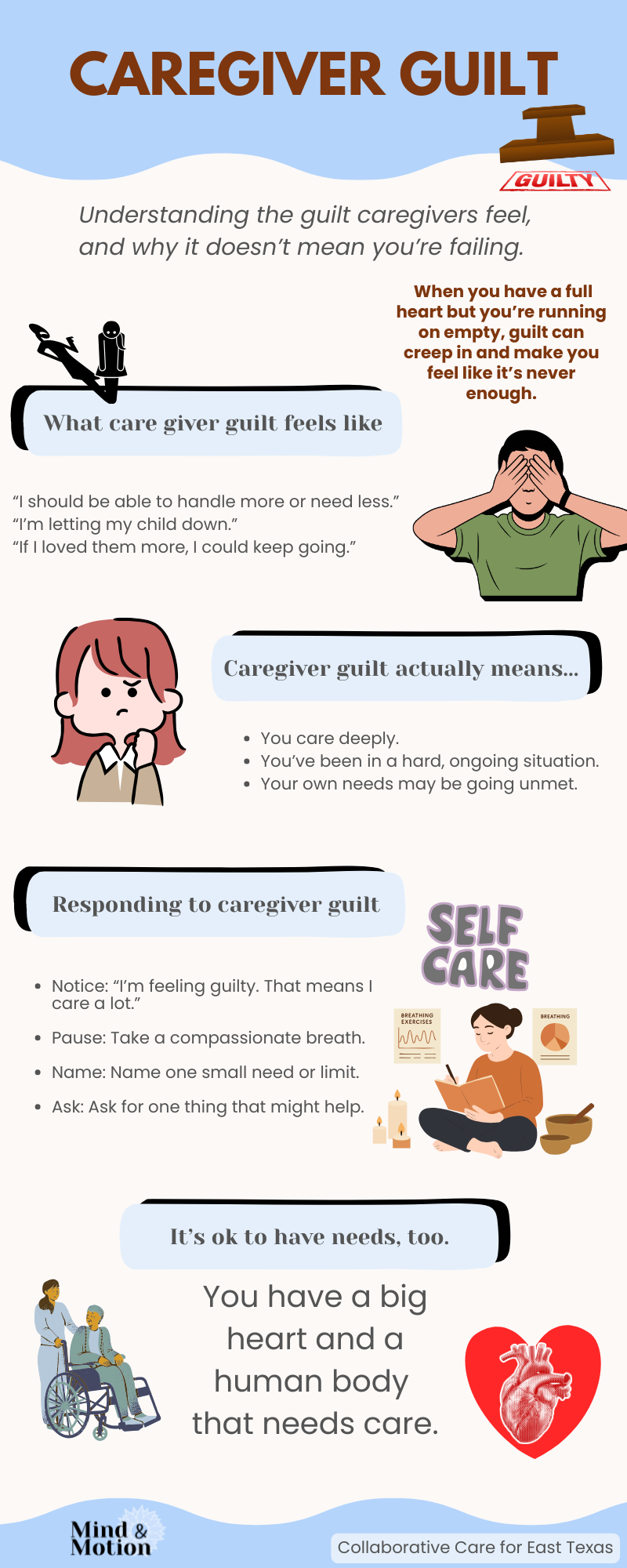
Caregiver guilt is common, especially for parents who are doing their best in difficult circumstances. Guilt often shows up as the belief that you should be able to handle more, need less, or push through for the sake of your child. But guilt doesn’t mean you’re doing something wrong. It usually means you care deeply. Unfortunately, guilt can also make it harder to notice when your own needs are going unmet.
Supporting your child may require flexibility and sacrifice, but it doesn't require losing yourself. Your capacity matters. Children don’t benefit from caregivers who are stretched beyond their limits, but instead children benefit from caregivers who are supported, regulated, and allowed to be human. Taking care of yourself isn’t something you do instead of caring for your child: it’s something you do as part of caring for your child.
Asking for help doesn’t mean you’re weak or incapable. It means you’re responding realistically to a hard situation. When friends, family, or professionals support you, they're also supporting your child. Caregiving was never meant to be done alone. Modeling boundaries, rest, and self-compassion teaches children that care can be sustainable and that everyone’s needs matter.
You’re allowed to have needs alongside your child’s needs. You are part of your child’s system, and when one part of that system is overwhelmed, the rest feels it too. Support works best when it includes the whole system - not just the person who appears to be struggling the most.
If you’re feeling tired, conflicted, or stretched thin, it doesn’t mean you’re failing as a caregiver. It means you’re a human in a demanding role. Support, rest, and boundaries are not signs of giving up. They’re signs of care. You don’t have to do this perfectly, and you don’t have to do it alone.


Comments